
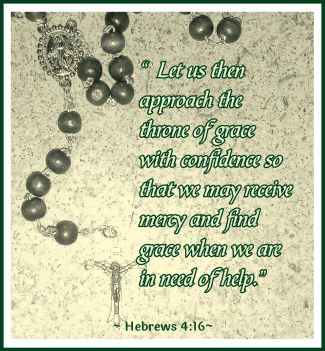
Let Us Pray For Our Own Needs
why pray
FOR OUR OWN NEEDS
Praying for our own needs is strongly affirmative and rooted in Scripture, and Tradition. It is viewed as a natural, spontaneous, and essential form of prayer called prayer of supplication (or petition), which expresses our dependence on God as creatures and sinners who rely on His providence.
This explicitly includes personal needs—spiritual (example, forgiveness, strength against temptation) and temporal (example, daily provisions, healing, guidance). The first movement of petitionary prayer is often asking for forgiveness, as in the tax collector’s plea: “God, be merciful to me a sinner!” (Luke 18:13; CCC §2631).
Jesus Himself models and teaches this: The Lord’s Prayer (Matthew 6:9–13; Luke 11:2–4) includes direct petitions for our own needs: “Give us this day our daily bread,” “forgive us our trespasses,” “lead us not into temptation,” and “deliver us from evil.” These are communal (“us”) but clearly encompass personal necessities and struggles.
Jesus encourages persistent, trusting prayer for our own needs: “Ask, and it will be given you; seek, and you will find; knock, and it will be opened to you” (Matthew 7:7).
The Holy Spirit helps us in our weakness when we do not know how to pray as we ought (Romans 8:26).
However, Scripture also warns against distorted motives. James 4:3 notes that we sometimes “ask and do not receive, because you ask wrongly, to spend it on your passions.” Petitionary prayer must be humble, trusting, and aligned with God’s will—not selfish or demanding.
Praying for our own needs is a fundamental aspect of the Catholic faith, allowing us to express gratitude, seek guidance, and intercede for personal challenges in union with the Church.
It is a direct line of communication with God, (Matthew 6:6) where individuals express their desires and seek support for their personal challenges, often through the intercession of the Blessed Virgin Mary and the saints.
This practice serves as a reminder of our vulnerability and the strength found in faith, as exemplified in the Lord’s Prayer, which Jesus taught us as a model for petitioning our Heavenly Father.
Through prayer, we invite peace and guidance into our lives, trusting that our own needs will be met according to God’s will in due time. (Psalm 27:13-14) It fosters hope and connection, nurturing our spirit in times of uncertainty while drawing us closer to the sacramental life of the Church.
As St. Thomas Aquinas taught, we pray not to change God’s mind but to receive what He has already disposed to give through our prayers.
THIS SECTION HAS LINKS TO CONTEMPLATION AND PRAYERS FOR OUR VARIOUS PERSONAL NEEDS, BOTH TEMPORAL AND SPIRTUAL. LET US THEN PRAY WITH FAITH TO OUR LOVING HEAVENLY FATHER IN THE NAME OF JESUS OUR LOVING SAVIOR, WITH THE HELP OF THE HOLY SPIRIT OUR LOVING FRIEND. LET US ALWAYS JOIN OUR PRAYERS WITH THE POWERFUL INTERCESSION OF OUR LOVING MOTHER AND THE INTERCESSION OF ALL THE ANGELS AND SAINTS.