
PRAYER TO ST MICHAEL THE ARCHANGEL
()
St Michael, the Archangel, defend us in battle, be our defense against the wickedness and snares of the devil. May God rebuke him, we humbly pray; and do you O Prince of the heavenly host, by the power of God, thrust into Hell Satan and the other evil spirits who prowl about the world for the ruin of souls. Amen.
LATIN
| oratio ad sanctum michael |
Sancte Michael Archangele, defende nos in proelio, contra nequitiam et insidias diaboli esto praesidium. Imperet illi Deus, supplices deprecamur: tuque, Princeps militiae caelestis, Satanam aliosque spiritus malignos, qui ad perditionem animarum pervagantur in mundo, divina virtute, in infernum detrude. Amen.
The Prayer to PRAYER TO ST MICHAEL THE ARCHANGEL is both scriptural and liturgical, firmly established in the Church’s belief in angelic intercession and spiritual warfare.
Roots
The prayer’s biblical foundation lies in Revelation 12:7–9, where St Michael leads the heavenly armies against the dragon (Satan). Michael’s role as defender of God’s people is also reflected in Daniel 10:13 and 12:1, where he is described as the great prince who protects Israel.
Origins
The PRAYER TO ST MICHAEL THE ARCHANGEL was composed in 1886 by Pope Leo XIII. According to tradition, after celebrating Mass one morning, Leo XIII experienced a vision in which he saw Satan boasting that he could destroy the Church if given enough time and power.
Deeply shaken, the Pope immediately wrote this prayer and ordered it to be recited after Low Mass throughout the Catholic world. The prayer became part of the “Leonine Prayers,” a set of devotions recited after Mass, emphasizing the Church’s need for protection against evil.
Today
Though the Leonine Prayers were suppressed in 1964 during the Vatican II liturgical reforms, but devotion to St Michael persisted privately among the faithful.
The original longer version of the prayer was included in the Roman Ritual as part of exorcism rites, underscoring its association with spiritual combat.
While no longer obligatory after Mass, many parishes and communities have revived the prayer, especially in times of crisis or moral struggle. It is widely prayed by individuals seeking protection from temptation, evil, and spiritual attack.
In a world increasingly aware of spiritual and moral challenges, the prayer has regained prominence as a concise, powerful invocation of divine aid.
The prayer’s enduring appeal lies in its clarity and urgency. It acknowledges the reality of evil, affirms God’s sovereignty, and entrusts believers to the protection of St Michael, the “Prince of the heavenly host.” Its rhythm—petition, humility, and command—makes it both accessible and forceful. Today, the Prayer to St. Michael stands as a bridge between tradition and modern devotion: a 19th-century papal response to spiritual danger that continues to inspire confidence in God’s victory over evil.
MORE ON "PRAYER TO ST MICHAEL"
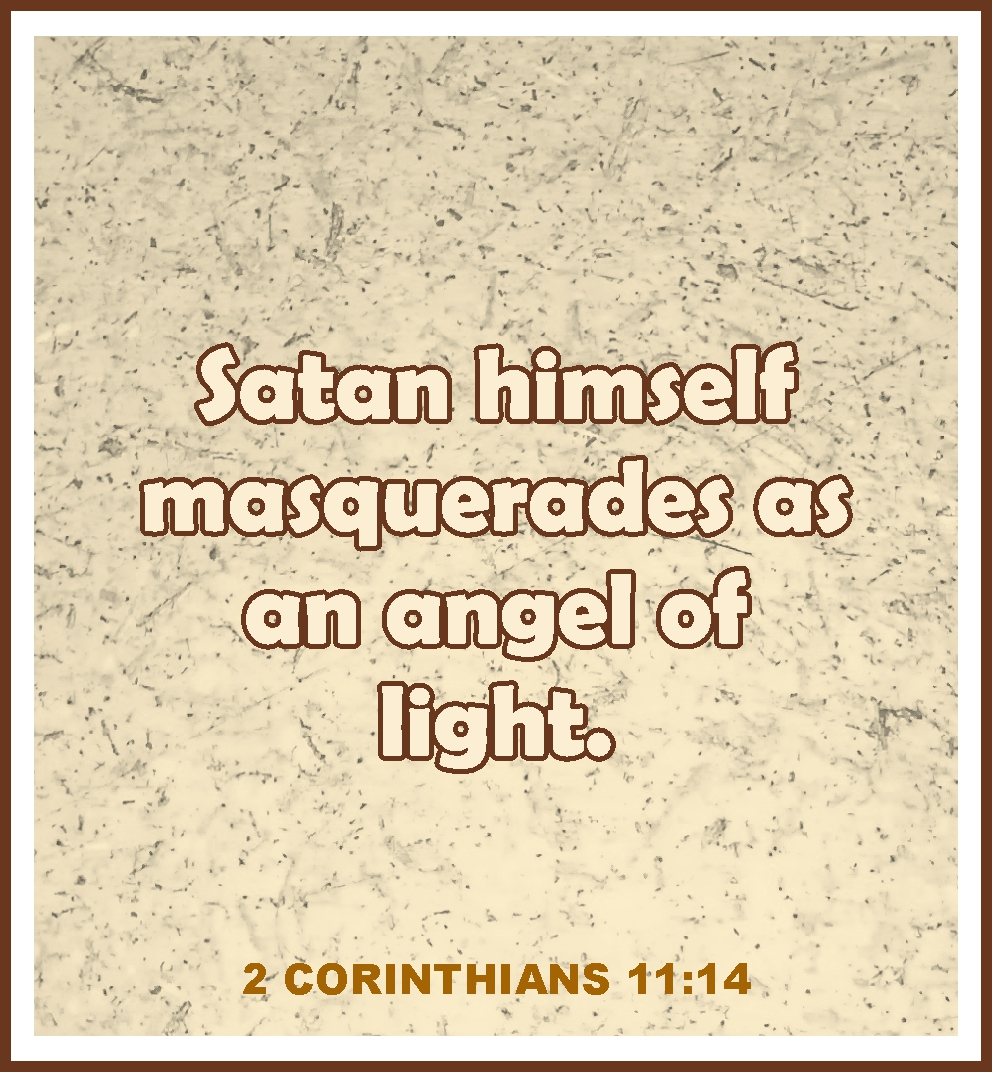
The image at the head of this page, has the verse from 2Corinthians 11:14 “Satan himself masquerades as an angel of light”
This verse exposes a serious threat to our spiritual wellbeing. This was a danger 2000 years ago and it still is.
St Paul’s warning is as urgent today as it was in Corinth. Evil rarely comes dressed in darkness; it comes clothed in brilliance, in what looks like wisdom, holiness, or even “absolute truth.”
The Angel of Light in Modern Disguise
Satan’s masquerade as an angel of light is not an ancient myth but a present-day reality. In a world where evil often dresses itself in the garments of progress, pleasure, or compassion, Christians must remain vigilant. The danger is subtle, but the defense is clear: cling to Christ, the true Light, who exposes every counterfeit and guides His people safely through the shadows.
St Paul’s warning that Satan can appear as an “angel of light” (2Corinthians 11:14) is not a poetic exaggeration but a sober reminder that evil rarely presents itself as ugly or repulsive. Instead, it cloaks itself in beauty, convenience, or apparent goodness. This deception is a real spiritual danger today, precisely because modern life is saturated with voices, images, and ideologies that seem attractive yet subtly lead hearts away from Christ.
False Light in Technology and Media
In the digital age, countless platforms promise connection, knowledge, and empowerment. Yet beneath the glow of screens lies the temptation to vanity, comparison, and addiction. Social media can masquerade as community while fostering isolation and envy. Entertainment can present itself as harmless fun while normalizing sin. The danger is not in the tools themselves but in the subtle shift of priorities—when the pursuit of likes, trends, or pleasure eclipses the pursuit of holiness.
Ideologies That Sound Compassionate
Modern ideologies often present themselves as enlightened, tolerant, or progressive. They speak the language of compassion but sometimes redefine truth to fit cultural convenience. For example, relativism masquerades as humility (“everyone has their own truth”), yet it undermines the absolute truth of Christ. Consumerism masquerades as freedom (“you deserve more”), yet it enslaves the soul to endless desire. These “angels of light” appeal to noble instincts—justice, mercy, dignity—but twist them away from God’s design.
Personal Temptations Disguised as Good
On a personal level, Satan’s disguise often takes the form of seemingly reasonable excuses: “I’m too busy to pray, but I’m working hard for my family,” or “I’ll indulge just this once—it’s harmless.” The danger lies in the gradual erosion of conscience. What begins as small compromises, dressed up as practicality or self‑care, can lead to spiritual blindness. The angel of light whispers not blatant rebellion but subtle rationalizations.
The Christian Response
The antidote is discernment rooted in Scripture, Tradition, and prayer. Just as counterfeit currency is detected by knowing the real thing, false light is exposed by immersing oneself in the true light of Christ. Daily examination of conscience, sacramental life, and spiritual guidance help us distinguish between genuine holiness and its counterfeit. The PRAYER TO ST MICHAEL THE ARCHANGEL—“defend us in battle”—remains strikingly relevant, reminding Christians that spiritual warfare is ongoing and deceptive.