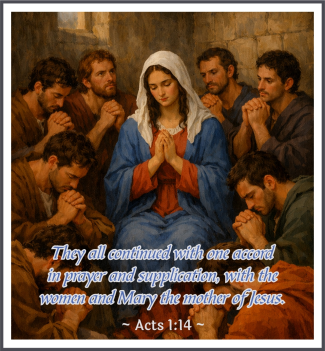
The practice of praying a novena—nine consecutive days of prayer—has deep roots in Christian tradition, reaching back to the nine days between Christ’s Ascension and Pentecost, when Mary and the Apostles prayed together in the Upper Room awaiting the coming of the Holy Spirit.
That period of expectant prayer became the model for the novena: a rhythm of devotion marked by perseverance, trust, and hope.
At its heart, a novena is not simply about repetition, but about entering into a spiritual journey. Each day of prayer builds upon the previous day, weaving together our petitions with faith and patience.
The number nine itself carries symbolic meaning: it reflects completeness and preparation, a time of gestation before new life or grace is revealed.
Praying a novena for both temporal and spiritual needs reflects the fullness of human life. We are embodied souls, living in the tension between earthly struggles and eternal destiny. A novena bridges that gap: it sanctifies our daily concerns by lifting them heavenward, while also grounding our spiritual aspirations in the reality of our lived experience.
THIS SECTION HAS LINKS TO VARIOUS NOVENAS AS EXPRESSION OF OUR FAITH IN GOD’S PROVIDENCE, AS DIALOGUE OF LOVE, AND AS STEADY KNOCKING AT THE DOOR OF GOD’S MERCY. WHETHER OUR PETITIONS ARE ANSWERED IN SEEN OR UNSEEN WAY, THE NINE DAYS OF PRAYER IS HELPS US FORM OUR FAITH, HOPE, AND TRUST.