
MEMORIAL ACCLAMATION
(The Mystery of Faith)
THE PRIEST ANNOUNCES:
The Mystery of Faith
THEN ALTOGETHER:
We proclaim your Death, O Lord, and profess your Resurrection until you come again.
OR
When we eat this Bread and drink this Cup, we proclaim your Death, O Lord, until you come again.
OR
Save us, Savior of the world, for by your Cross and Resurrection you have set us free.
•
(Note: This was widely used in English but is no longer in the current Roman Missal)
Christ has died, Christ is risen, Christ will come again.
•
LATIN
| mysterium fidei |
SACERDOS NUNTIAT:
Mysterium fidei
DEINDE OMNINO:
Mortem tuam annuntiamus, Domine, et tuam resurrectionem confitemur, donec venias.
VEL
Quotiescumque manducamus panem hunc et calicem bibimus, mortem tuam annuntiamus, Domine, donec venias.
VEL
Salvator mundi, salva nos, qui per crucem et resurrectionem tuam liberasti nos.
The MEMORIAL ACCLAMATION originated in the ancient Greek liturgies, especially the Liturgy of St James, and was formally introduced into the Roman Catholic Mass in 1969 after Vatican II to encourage congregational participation. It developed from priest-only prayers into a communal proclamation of Christ’s death, resurrection, and future coming.
Roots
In the Liturgy of St James, after the Words of Institution, the people responded with acclamations such as “Your death, O Lord, we commemorate, your resurrection we confess, and your second coming we await.”
In the Alexandrian Rite it was present in the liturgies of St Cyril, St Basil, and St Gregory, combining priestly prayers with congregational responses.
These acclamations emphasized anamnesis[Greek = remembrance or memorial] In Christian liturgy, it means a sacramental remembrance that makes Christ’s saving events present and effective here and now, most especially in the Eucharist where the Church recalls his Passion, Resurrection, and Ascension. While it is a memory of the past, it is not just that, it is a living and active participation in the mystery of that memory. —the memorial of Christ’s death, resurrection, and eschatological hope.
Development
Before Vatican II, the phrase Mysterium fidei (“Mystery of Faith”) was recited silently by the priest after consecration. In 1969, Pope Paul VI’s liturgical reforms introduced the The MEMORIAL ACCLAMATION originated in the ancient Greek liturgies, especially the Liturgy of St James, and was formally introduced into the Roman Catholic Mass in 1969 after Vatican II to encourage congregational participation.
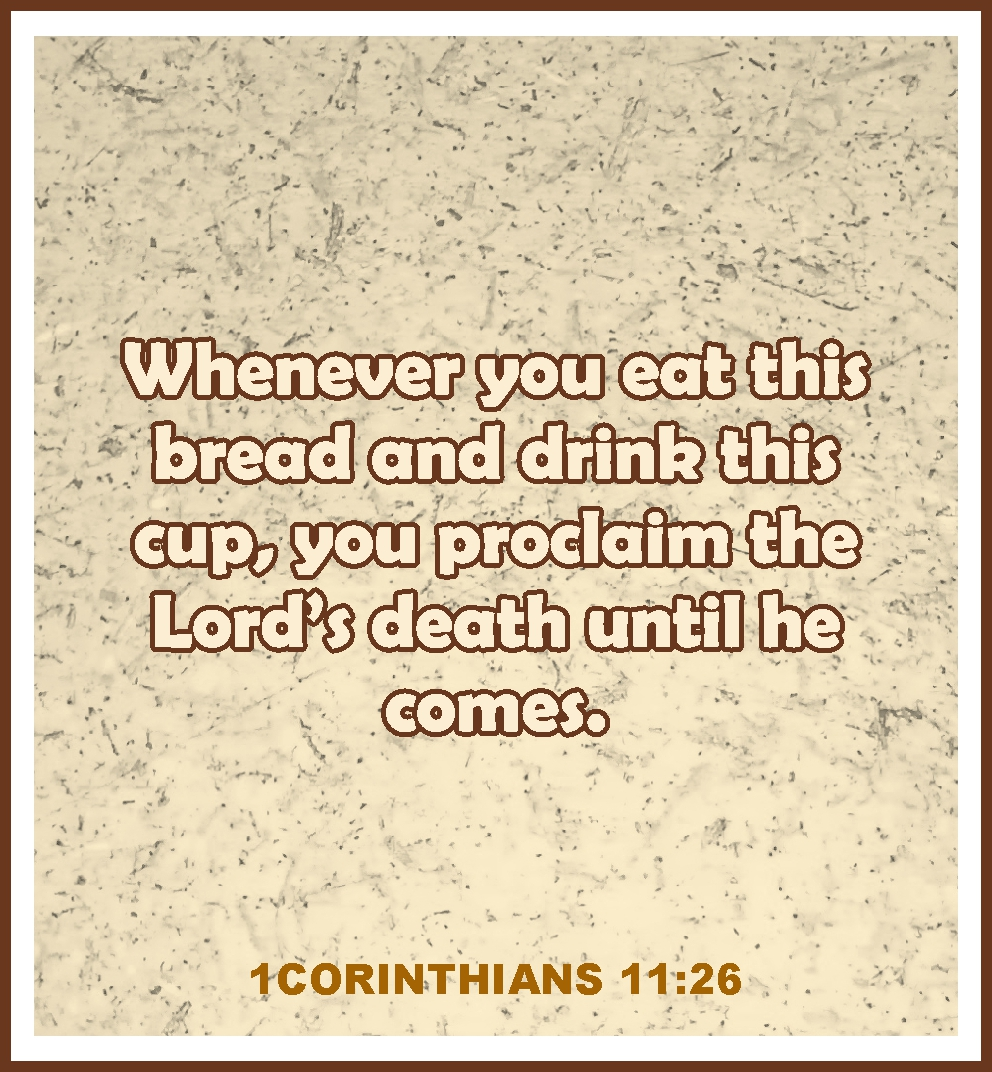
MEMORIAL ACCLAMATION developed from priest-only prayers into a communal proclamation of Christ’s death, resurrection, and future coming, into the Roman Missal, making it a spoken or sung congregational response. Inspired by biblical texts (1Corinthians 11:26) and Eastern traditions, it highlighted the Eucharist as a proclamation of Christ’s redemptive work.
In the Roman Missal (2002, English 2011), the priest announces, “The Mystery of Faith”, followed by the congregation joining in one of the three prescribed acclamations. MEMORIAL ACCLAMATION emphasize eschatological hope and communal worship, often set to music for congregational singing.
MORE ON "MEMORIAL ACCLAMATION"
In the image at the head of this page, has the words from 1Corinthians 11:26 the original words of the Memorial Acclamation. To contemplate on why Jesus chose Bread and Wine to memorialize himself read this:
“Why did Our Blessed Lord use bread and wine as the elements of this Memorial? … Wheat has to pass through the rigors of winter, be ground beneath the Calvary of a mill, and then subjected to purging fire before it can become bread. Grapes in their turn must be subjected to the Gethsemane of a wine press and have their life crushed from them to become wine. Thus, do they symbolize the Passion and Sufferings of Christ.” (Fulton Sheen: Life of Christ)
the eternal memorial
Every human memorial is erected by others—statues, plaques, rituals—all designed to preserve their memory after death. But Christ alone established his own memorial before his Passion (Fulton Sheen: Life of Christ).
On the night he was betrayed, he took bread and wine, gave thanks, and said: “Do this in memory of me.” In this command, he did not entrust his remembrance to monuments but to a living act: the Eucharist.
The Eucharist is not a just recollection of the past. It is anamnesis—a memorial that is not static but dynamic, making the Paschal Mystery present reality. In it, Christ’s sacrifice is not repeated but re-presented, drawing the us into his Paschal Mystery. Unlike human memorials that fade with time, Christ’s memorial is eternal, sustained by his own promise and presence.
Within the liturgy, this memorial unfolds in two movements: the consecration and the proclamation. After the bread and wine become the Body and Blood of Christ, the priest announces: “The Mystery of Faith.”
Here the faithful respond with the Memorial Acclamation, which gives voice to this mystery, affirming that his memorial is alive in their worship.
It is the Church’s echo of Christ’s command, proclaiming his death, confessing his resurrection, and awaiting his coming in glory. In this moment, the Eucharist’s memorial becomes Christ’s gift to the Church and the Church acceptance.