
I CONFESS
()
I confess to Almighty God, and to you, my brothers and sisters, that I have greatly sinned, in my thoughts and in my words, in what I have done and in what I have failed to do, through my fault, through my fault, through my most grievous fault. Therefore I ask Blessed Mary ever-Virgin, all the Angels and Saints, and you, my brothers and sisters, to pray for me to the Lord our God.
LATIN
| confiteor |
Confiteor Deo omnipotenti et vobis, fratres, quia peccavi nimis cogitatione, verbo, opere et omissione: mea culpa, mea culpa, mea maxima culpa. Ideo precor beatam Mariam semper Virginem, omnes Angelos et Sanctos, et vos, fratres, orare pro me ad Dominum Deum nostrum.
The “I CONFESS” [Latin: Confiteor] is a general confession of sins used in the Roman Rite of the Catholic Church, primarily as part of the Penitential Act at the beginning of Mass. It serves as a public acknowledgment of sinfulness, a request for the intercession of the saints and the community, and preparation for worthy participation in the liturgy (and reception of grace).
The prayer takes its name from the first word of the Latin text: Confiteor Deo omnipotenti… (“I confess to Almighty God…”). The standard modern form (post-Vatican II) includes striking the breast at “through my fault, through my fault, through my most grievous fault” (mea culpa, mea culpa, mea maxima culpa), an ancient gesture of contrition.
Origins
The I CONFESS developed from formulas used in sacramental confession (Penitentials). Similar confessions appear in early Church practices. Eastern liturgies (like, Antiochene and Alexandrine) often began with the celebrant making a confession of sin.
Forms resembling the I CONFESS appear in penitential contexts outside Mass. St Chrodegang of Metz (712-766) and Egbert of York (d766) provide early seeds, such as confessing sins “in thought, word, and deed” through one’s own fault (mea culpa) and invoking saints like Mary and the Apostles for intercession. The MisereaturName for the first part of the absolution in the Catholic liturgy. It begins with the words: “Misereatur vestri omnipotens Deus…” (“May almighty God have mercy on you…”). It follows the Confiteor (the public confession of sins) said together by the priest, servers and congregation. The priest then pronounces this prayer for the forgiveness of sins. response also appears early. It likely began as a private prayer said by the priest in the sacristy before Mass, similar to other preparatory devotions.
Early Roman sacramentariesLiturgical books used in the Western Church (especially during the Early and High Middle Ages) containing the prayers, texts, and rites spoken or sung by the bishop or priest during Mass and other sacraments/rites (such as ordinations, blessings, and exorcisms). Unlike later missals, it omits readings and congregational parts. In modern usage, the term has also referred to certain editions of the Roman Missal focused on the celebrant’s prayers. and ordines[Singular: ordo] In medieval Western liturgy, short ritual books or collections (especially the Ordines Romani) that provided detailed stage directions, rubrics, and ceremonial instructions for conducting Mass and other rites. They focused on the practical “how-to” of the liturgy (processions, gestures, roles of clergy, etc.) without including the spoken prayers themselves (found in sacramentaries) or readings. Often used alongside sacramentaries for full celebration of services. do not mention it at the start of Mass, which began with the IntroitA chant assigned to each Mass, drawn from Scripture (usually a Psalm verse with an antiphon). It was traditionally sung by the choir as the priest approached the altar. Its purpose was to set the spiritual tone of the feast or liturgical day, accompany the procession, and introduce the theme of the Mass. Similar to the modern ‘Entrance Hymn’, but strictly from Scripture.
By the 10th or 11th century, the preparation moved to the altar (noted in the Sixth Roman Ordo). Bernold of Constance (1054-1100) in his Micrologus de ecclesiasticis observationibus quotes a form: “Confiteor Deo omnipotenti… quia peccavi in cogitatione, in locutione, in opere…” followed by Misereatur and Indulgentiam. It became part of the “Prayers at the Foot of the Altar.”
Medieval forms varied widely: the list of saints invoked (Mary, Michael, John the Baptist, Peter and Paul, etc.) differed by region or order, sometimes becoming lengthy. Shorter versions existed in places like the Sarum Missal.
By the 14th century (Ordo Romanus XIV), forms closer to the modern one appear. The Third Council of Ravenna (1314) mandated a specific form in its province. Following the Council of Trent, Pius V’s Roman Missal (1570) standardized the Confiteor, with limited exceptions for ancient rites (Carthusian, Carmelite, Dominican, which have shorter forms and sometimes invoke their founder). Some orders could add their patron. This form remained in use in the Tridentine Mass.
In the Novus Ordo (1970 Missal), the I CONFESS is one option in the Penitential Act (alongside the Kyrie or other invocations). It was simplified for communal use by the whole assembly, with some saints removed from the standard text to streamline it, while retaining core elements.
The 2011 English translation restored more literal phrasing (“greatly sinned” and the triple mea culpa).
The prayer emphasizes both personal responsibility (“through my fault”) and the communal, intercessory nature of the Church. It prepares participants for the liturgy by seeking mercy for venial sins and fostering humility. Variants persist in some religious orders and historical uses, reflecting its organic liturgical development.
Sources like the Catholic Encyclopedia provide the most detailed historical tracing from primary liturgical texts.
MORE ON "I Confess"
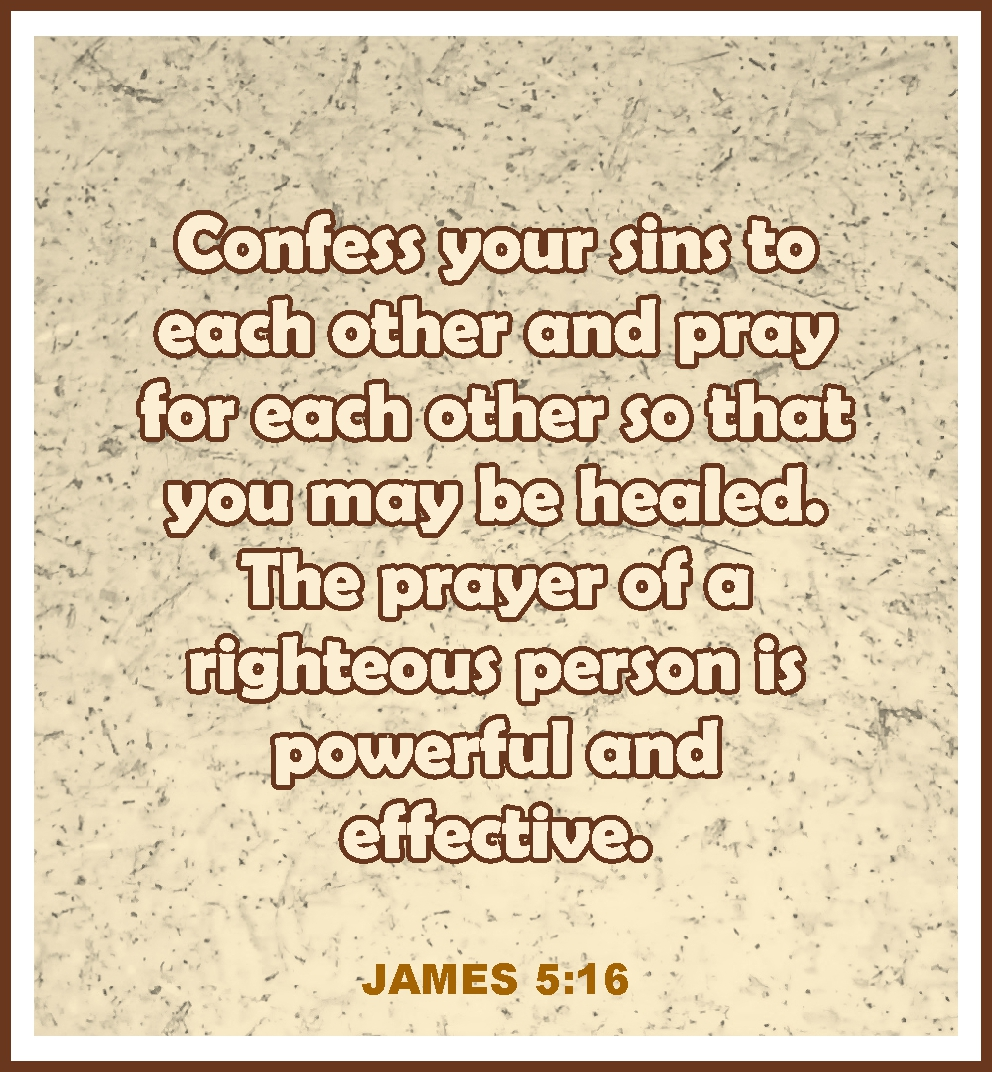
In the image at the head of this page, we have quoted from James 5:16. We believe that prayer offered in faith, especially by those striving for holiness, is powerful. This is why the Church emphasizes praying for one another, and also invokes the prayers of the saints, who are righteous before God.
Pre Novus Ordo Confiteor
The Council of Trent (1545–1563) led to the standardization of the Roman Missal. The Missal of 1570 by Pope St Pius V fixed the Confiteor in a form that remained unchanged in wording until 1962.
The prayer invoked Mary, Michael the Archangel, John the Baptist, Peter and Paul, and all the saints. It was recited twice at the start of Mass: first by the priest, then by the servers (with slight wording changes).
It was also prescribed before Communion, Extreme Unction, and the Apostolic Blessing for the dying.
I confess to Almighty God, to Blessed Mary ever Virgin, to Blessed Michael the Archangel, to Blessed John the Baptist, to the holy Apostles Peter and Paul, to all the Saints, and to you, Father, that I have sinned exceedingly in thought, word, and deed: through my fault, through my fault, through my most grievous fault. Therefore I beseech Blessed Mary ever Virgin, Blessed Michael the Archangel, Blessed John the Baptist, the holy Apostles Peter and Paul, all the Saints, and you, Father, to pray to the Lord our God for me.
LATIN
Confiteor Deo omnipotenti, beatae Mariae semper Virgini, beato Michaeli Archangelo, beato Ioanni Baptistae, sanctis apostolis Petro et Paulo, omnibus Sanctis, et tibi, Pater, quia peccavi nimis cogitatione, verbo et opere: mea culpa, mea culpa, mea maxima culpa. Ideo precor beatam Mariam semper Virginem, beatum Michaelem Archangelum, beatum Ioannem Baptistam, sanctos apostolos Petrum et Paulum, omnes Sanctos, et te, Pater, orare pro me ad Dominum Deum nostrum.