
GLORIA
(Glory to God in the highest)
Glory to God in the highest. And on earth peace to men of good will. We praise You. We bless You. We adore you. We glorify You. We give You thanks for Your great glory.
O Lord God, heavenly King, God the Father almighty.
O Lord Jesus Christ, the Only Begotten Son. O Lord God, Lamb of God, Son of the Father: you Who take away the sins of the world, have mercy on us. You Who take away the sins of the world, receive our prayer. You Who sit at the right hand of the Father, have mercy on us. For you alone are holy. You alone are the Lord. You alone, O Jesus Christ, are most high.
Together with the Holy Spirit in the glory of God the Father. Amen.
LATIN
| gloria |
Gloria in excelsis Deo, et in terra pax hominibus bonae voluntatis. Laudamus te, benedicimus te, adoramus te, glorificamus te, gratias agimus tibi propter magnam gloriam tuam, Domine Deus, Rex caelestis, Deus Pater omnipotens.
Domine Fili unigenite, Iesu Christe, Domine Deus, Agnus Dei, Filius Patris, qui tollis peccata mundi, miserere nobis; qui tollis peccata mundi, suscipe deprecationem nostram; qui sedes ad dexteram Patris, miserere nobis.
Quoniam tu solus Sanctus, tu solus Dominus, tu solus Altissimus, Iesu Christe, cum Sancto Spiritu: in gloria Dei Patris. Amen.
The GLORIA (“Glory to God in the highest”) originated as the angelic hymn of Luke 2:14 and developed into one of Christianity’s earliest doxologies, first appearing in Greek prayers of the 2nd–3rd centuries before being translated into Latin by St Hilary of Poitiers in the 4th century. It became a fixed part of the Mass by the early Middle Ages, celebrated as the Greater Doxology distinct from the shorter Gloria Patri (“Glory be…”). It affirms Jesus as Lord, Lamb of God, Son of the Father, and Most High.
Roots
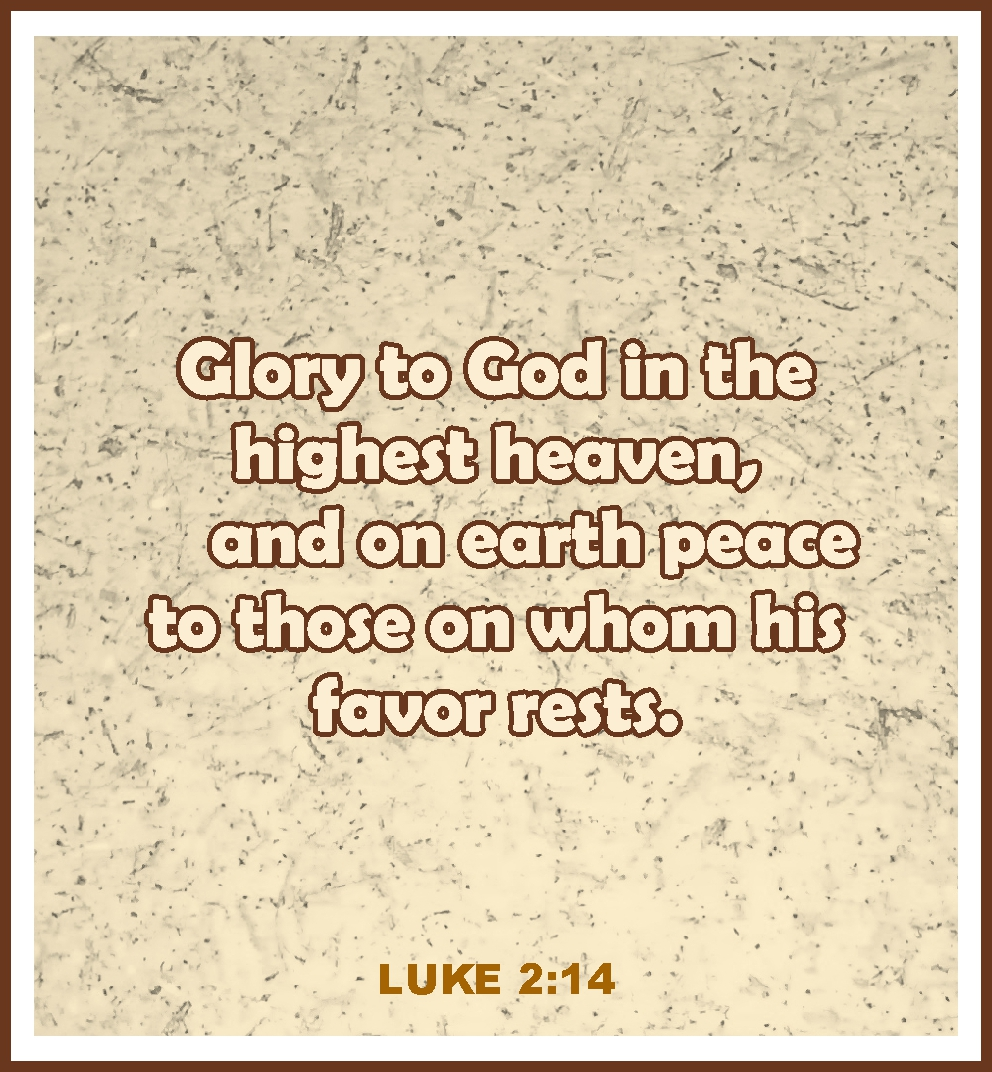
The opening line comes directly from Luke 2:14, the angels’ song at Christ’s birth: “Glory to God in the highest heaven, and on earth peace to those on whom his favor rests.”
Early Christians added verses of praise, forming a longer hymn that exalted the Trinity.
By the 2nd–3rd centuries, the hymn was part of private psalm-like compositions psalmi idioticiRefers to a curious phenomenon in early Christian and medieval literature. It literally means ‘idiotic psalms’ but not in the modern sense of ‘stupid.’ Instead, idiotici comes from the Greek idiōtēs, meaning ‘layperson’ or ‘untrained.’ So these were psalms or hymns composed by ordinary believers rather than by trained theologians or liturgical authorities. , alongside texts like the Te DeumA traditional Christian hymn of praise, dating back to the 4th century. Its Latin title means “Thee, O God, we praise.” Often sung at major liturgical celebrations, thanksgiving services, and solemn occasions, it expresses gratitude and reverence to God. and Phos HilaronAn ancient Christian hymn, often called the ‘Lamp-lighting Hymn.’ Its Greek title means “O Gladsome Light.” Traditionally sung at Vespers when lamps were lit, it praises Christ as the joyful, eternal Light and is one of the earliest non-biblical hymns still in regular use. .
The GLORIA appears in the Apostolic Constitutions (3rd–4th century) in morning prayers, showing its liturgical use in the East. Byzantine tradition: The Orthodox Church still sings an extended form of the GLORIA at OrthrosThe morning service in the Eastern Orthodox and Eastern Catholic liturgical tradition. Called ‘Matins’ in the West, it is a lengthy, hymn-rich prayer service celebrated at dawn, featuring psalms, canons, and the reading of the Gospel. , ending with the Trisagion[Greek = Thrice Holy] An ancient Christian prayer known as the ‘Thrice-Holy Hymn.’ referring to the repeated invocation: “Holy God, Holy Mighty, Holy Immortal, have mercy on us.” Widely used in Eastern Orthodox, Eastern Catholic, and some Western liturgies, it emphasizes God’s holiness and mercy. .
St Hilary of Poitiers (315–368) is credited with translating the hymn into Latin during his exile in the East. His version became part of the Vetus Latina[Latin = Old Latin] The collective name for the earliest Latin translations of the Bible, made before St Jerome’s Vulgate (late 4th century). These versions were not uniform but consisted of various local translations used across the Western Church. But they preserve valuable insights into early biblical interpretation and textual history. tradition before Jerome’s Vulgate. Latin uses excelsis [means Highest] while Jerome preferred altissimis [mean Most High]. The GLORIA later adds “Tu solus Altissimus, Iesu Christe” [“You alone are the Most High, Jesus Christ”].
Liturgical Development
Tradition holds that Pope Telesphorus (2nd century) ordered the GLORIA sung at Christmas Mass and Pope Symmachus (498–514) extended its use to Sundays and feast days of martyrs.
In the Roman Rite, it follows the Kyrie and precedes the Collect, sung on Sundays outside Advent and Lent, and on solemnities and feasts.
The GLORIA is a hymn that bridges Scripture, early Christian prayer, and liturgy, evolving from the angelic hymn of Luke into a cornerstone of worship in both East and West.
MORE ON "GLORIA"
In the image at the head of this page, has the words from the first Gloria from Luke 2:14 on the first Christmas day. This is a beautiful narrative:
“And there were shepherds living out in the fields nearby, keeping watch over their flocks at night. An angel of the Lord appeared to them, and the glory of the Lord shone around them, and they were terrified. But the angel said to them, ‘Do not be afraid. I bring you good news that will cause great joy for all the people. Today in the town of David a Savior has been born to you; he is the Messiah, the Lord. This will be a sign to you: You will find a baby wrapped in cloths and lying in a manger.’
“Suddenly a great company of the heavenly host appeared with the angel, praising God and saying, ‘Glory to God in the highest heaven, and on earth peace to those on whom his favor rests.’” (Luke 2:8-14)
peace to those on whom his favor rests
The angelic visitation to the shepherds on that first Christmas night is a charming pastoral scene but its theological revelation that discloses the very heart of God’s plan.
The shepherds, humble and often marginalized in society, are chosen as the first witnesses of the Incarnation. This choice appears to be deliberate in that it fulfills the Magnificat’s promise that God “has lifted up the lowly” and signals that the Gospel is not preserve of the powerful but is offered first to the poor and simple of heart.
In them we see the foreshadowing of Christ himself, the Good Shepherd, who will gather his flock and lay down his life for them.
The angels’ hymn, Gloria in excelsis Deo, is the heavenly proclamation that heaven and earth are now joined in the person of Christ. The words “Glory to God in the highest, and on earth peace to those on whom his favor rests” reveal that the Incarnation connects divine glory and human peace.
In biblical thought, shalom [Hebrew = peace] is not merely the absence of conflict but the fullness of life lived in communion with God. Thus, the angels glorify God because His mercy and fidelity are made manifest in the birth of the Savior, and they announce peace as the fruit of that glory.
Worship and salvation are inseparably linked: the angels’ praise is not only adoration but proclamation, declaring that God’s glory is revealed in Christ and that His coming brings reconciliation to humanity.
Theologically, this moment inaugurates a cosmic liturgy. The angels sing the first GLORIA, and the shepherds echo it by glorifying and praising God as they return from Bethlehem (Luke 2:20).
Every time the Church sings the GLORIA at Mass, it participates in that same heavenly worship, continuing the angelic hymn across the centuries.
In sum, the visitation of the angels to the shepherds is a theological drama of humility, glory, and peace. It shows that God’s glory is revealed not in worldly power but in the vulnerability of a child; that His peace is offered to all who open their hearts; and that worship is the natural response to the mystery of the Incarnation.
The GLORIA sung by the angels in Bethlehem continues to resound in the liturgy of the Church, inviting us to join heaven’s praise and to live as witnesses of the peace Christ brings.