
WHAT IS PAPAL INFALLIBILITY?
Papal Infallibility is a dogma of the Catholic Church stating that the Pope, under very specific and narrowly defined conditions, is preserved by the Holy Spirit from error when he teaches definitively on matters of faith or morals. It does not mean the Pope is personally sinless, always right in his opinions, or infallible in non-doctrinal matters like science, politics, or everyday statements.
The doctrine was solemnly defined as a divinely revealed dogma at the First Vatican Council (1869–1870) in the dogmatic constitution Pastor Aeternus (Chapter4). The exact wording is:
“…when the Roman Pontiff speaks ex cathedra, that is, when, in the exercise of his office as shepherd and teacher of all Christians, in virtue of his supreme apostolic authority, he defines a doctrine concerning faith or morals to be held by the whole Church, he possesses, by the divine assistance promised to him in blessed Peter, that infallibility with which the divine Redeemer willed His Church to be endowed in defining doctrine concerning faith or morals. Therefore, such definitions of the Roman Pontiff are of themselves, and not by the consent of the Church, irreformable.”
This means the Pope is protected from error only when all these conditions are met simultaneously:
- He speaks ex cathedra, invoking his full supreme apostolic authority as pastor and teacher of the universal Church.
- He is addressing a matter of faith or morals.
- He intends to define—not merely suggest or discuss—a doctrine that must be held by the entire Church.
- He acts in his official capacity as supreme pontiff—not informally, such as in interviews, homilies, or personal writings).
The Catechism of the Catholic Church (CCC §891) echoes this: the Pope “enjoys this infallibility in virtue of his office, when… he proclaims by a definitive act a doctrine pertaining to faith or morals.”
What It Is Not
- It is not personal impeccability. Popes confess sins like any Catholic.
- It does not apply to the Pope’s private opinions, prudential judgments, or non-doctrinal teachings.
- Infallible statements are extremely rare—not a frequent occurrence. Most papal documents, encyclicals, speeches, or even ordinary magisterial teachings are not infallible.
- Infallibility also belongs to the Church as a whole (including the college of bishops in union with the Pope, especially in ecumenical councils), not exclusively to the Pope.
The belief that the Church is protected from error in definitive teachings on faith and morals existed from early Christianity, rooted in promises like Jesus’ words to Peter, and the Holy Spirit guiding the apostles ‘into all the truth’:
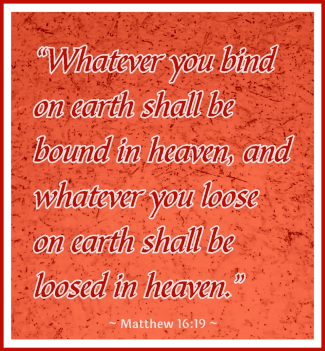
“…I say to you: You are Peter, and on this rock I will build my Church, and the gates of the hell will not prevail against it. I will give you the keys of the kingdom of heaven. Whatever you bind on earth shall be bound in heaven, and whatever you loose on earth shall be loosed in heaven.” (Matthew 16:18-19)
“But when the Spirit of truth comes, he will guide you into all the truth. He will not speak on his own authority, but he will speak what he hears, and he will declare to you the things that are coming.” (John 16:13).
The 1870 definition clarified and dogmatically declared the Pope’s role in this charism amid 19th-century debates about authority in the Church.
Only a handful of papal statements are universally recognized as ex cathedra infallible definitions over 2000 years. No Pope has, since 1950, issued an infallible definition. (For more on this read the link below: FURTHER COMMENTS ON “WHAT IS PAPAL INFALLIBILITY?“)
Within the Catholic Church, Papal Infallibility is seen as a gift of the Holy Spirit, ensuring the it can reliably proclaim the truths of divine revelation without error.
SEND A COMMENT
Links to our Massage Box
DOWNLOAD AS PDF
Printable version of this Page
Further Comments on "WHAT IS PAPAL INFALLIBILITY?"
COMMENT
The exercise of papal infallibility ex cathedra has been extremely rare. The Catholic Church does not maintain an official, list of such statements, and theologians note that the Pope has used this charism with great restraint. The Congregation for the Doctrine of the Faith (CDF) itself has stated that any examples it gives are “without any intention of completeness.”
Catholic teaching and scholarship overwhelmingly identify only two clear, undisputed instances in the entire history of the Church:
The Immaculate Conception of the Blessed Virgin Mary (December 8, 1854)
Pope Pius IX, in the Apostolic Constitution Ineffabilis Deus. This was issued 16 years before Vatican I formally defined papal infallibility in 1870, but it is universally accepted as meeting all the criteria and was “grandfathered in” as an ex cathedra act.
Key wording: “We declare, pronounce, and define that the doctrine which holds that the most Blessed Virgin Mary, in the first instance of her conception, by a singular grace and privilege granted by Almighty God, in view of the merits of Jesus Christ, the Savior of the human race, was preserved free from all stain of original sin, is a doctrine revealed by God and therefore to be believed firmly and constantly by all the faithful.”
The Assumption of the Blessed Virgin Mary (November 1, 1950).
Pope Pius XII, in the Apostolic Constitution Munificentissimus Deus. This is the only ex cathedra definition since Vatican I.
Key wording: “…by the authority of our Lord Jesus Christ, of the Blessed Apostles Peter and Paul, and by our own authority, we pronounce, declare, and define it to be a divinely revealed dogma: that the Immaculate Mother of God, the ever Virgin Mary, having completed the course of her earthly life, was assumed body and soul into heavenly glory.”
These are the only two that virtually all Catholic sources (theologians, the CDF, encyclopedias, and catechisms) treat as the textbook examples of ex cathedra statements.
A Few Additional Historically Recognized Cases
Scholars and the CDF sometimes recognize a small handful of earlier papal statements as also meeting the ex cathedra criteria (these predate the 1870 definition but are evaluated retroactively by the same standards). The most commonly accepted among these is:
Benedictus Deus (1336) – Pope Benedict XII. This defined the doctrine of the beatific vision: that the souls of the just who have no unrepented mortal sin see the divine essence immediately after death (and before the final judgment). The 1998 CDF commentary explicitly cites the underlying doctrine as an example of infallible teaching.
Unam Sanctam (1302) – Pope Boniface VIII’s on the necessity of belonging to the Church for salvation, or certain condemnations of errors are debated by theologians—some consider portions of them infallible, while others do not classify them as strict ex cathedra definitions.
Statements such as Pope Leo XIII’s Apostolicae Curae (1896) on the invalidity of Anglican orders or aspects of John Paul II’s Ordinatio Sacerdotalis (1994) on the male priesthood are often treated as infallible but are usually understood as falling under the ordinary (not ex cathedra) magisterium.
Why So Rare?
Popes have always been cautious. Ex cathedra statements are reserved for the most solemn, definitive acts on core matters of faith or morals. Most papal teaching—even very important encyclicals—falls under the ordinary papal magisterium and calls for religious submission of intellect and will, but not the absolute assent required for ex cathedra definitions.
While the exact number are debated (two undisputed vs a small handful more), the Church’s own documents and the near-universal consensus of theologians confirm that this extraordinary exercise of the papal magisterium has occurred only a very few times in 2,000 years. This is precisely why distinguishing the Pope’s personal views from his official teaching is so important—the ex cathedra bar is set extremely high.