
IS THERE SCRIPTURAL BASIS FOR CST?
(YES)
“Come now, you who are rich. Lament and weep over the miseries that will soon overwhelm you. Your riches have rotted. Your clothes are all moth-eaten. Your gold and silver have corroded. Their corrosion will serve as a witness against you and consume your flesh like a fire. You have hoarded wealth for the last days. (James 5:1-3)
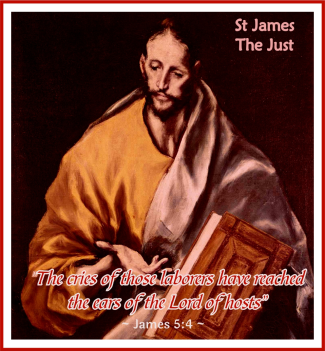
“Behold, the wages you fraudulently withheld from the laborers who harvested your fields are crying out, and the cries of those harvesters have reached the ears of the Lord of hosts. You have lived on earth in luxury and self-indulgence. You have gorged yourselves as on the day of slaughter. You have condemned the righteous man and murdered him, even though he offered you no resistance.” (James 5:4-6)
James 5:4 (in bold) is a pivotal verse in the Epistle of James, addressing the issue of fair wages and the moral responsibility of the wealthy towards their workers. The verse highlights the injustice of withholding wages from laborers, which is a violation of the Mosaic Law and a serious breach of justice.
It calls for the wealthy to pay their workers fairly and to ensure that their wealth is used ethically and responsibly. The verse serves as a reminder of the moral responsibility we have towards ensuring fair treatment and compensation for those who work for us.
It emphasizes the importance of justice and compassion in our interactions with others and encourages us to advocate for fairness and stand against exploitation in all its forms.
Catholic Social Teaching (CST) encompasses key principles guiding how Catholics engage with social, economic, and political issues, largely based on the Church’s interpretation of Scripture (the Bible).
Life and Dignity of the Human Person is a Divine gift
This foundational principle asserts that every person has inherent worth because they are created in God’s image, and hence, all human life is valuable and must be protected from conception (no abortion) to natural death (no euthanasia).
Genesis 1:27 states that God created mankind “…in his own image, in the image of God he created them; male and female he created them.” This underscores that human dignity is a reflection of the divine, which confers inherent worth and value to every individual.
This divine image emphasizes that all humans possess dignity and purpose, regardless of their social, economic, or physical condition. Ultimately, understanding human dignity as a reflection of the divine encourages individuals to act with respect and compassion towards one another, recognizing the intrinsic value of every person.
Matthew 25:40, where Jesus says, “Whatever you did for one of these least brothers of mine, you did for me,” linking the care for the vulnerable to His divine person. It highlights that the actions we take for those in need are ultimately acts of service to Jesus, as He identifies Himself with them.
The connection between our actions and the divine person underscores the idea that our faith and service to others are integral to our relationship with God.
In essence, this verse encourages a deeper understanding of the mission of Jesus and the call to live out His teachings in our daily lives.
Option for the Poor and Vulnerable
CST emphasizes prioritizing the needs of the poor and marginalized, viewing poverty as a moral issue that demands action.
Luke 4:18-19 quotes Jesus proclaiming, “…he has anointed me to proclaim good news to the poor. He has sent me to proclaim freedom for the prisoners and recovery of sight for the blind, to set the oppressed free…” spotlights God’s preferential concern for the lowly by declaring Jesus’ mission to bring good news to the poor, heal the brokenhearted, and set the captives free.
This passage emphasizes that Jesus’ ministry is centered on justice, mercy, and restoration, fulfilling the prophecy of Isaiah 61:1-2, which speaks of a servant who brings healing and liberation to those marginalized and suffering.
The verses point to the importance of compassion and love, calling believers to emulate Jesus’ example in caring for the vulnerable and marginalized. Overall, Luke 4:18-19 serves as a powerful reminder of God’s commitment to those who are oppressed and in need of healing and restoration.
Similarly, Psalm 72:12-13 describes a just ruler who “…will save the poor who cry out and the needy who have no one to help them. He will have pity on the lowly and the poor; the lives of the needy he will save.“
Solidarity
This principle promotes unity among all people, recognizing our interconnectedness and calling for actions that foster peace and justice globally.
Galatians 3:28 declares, “There is neither Jew nor Greek, there is neither slave nor free person, there is not male and female; for you are all one in Christ Jesus,” emphasizes human unity beyond divisions by declaring that in Christ, there is no distinction between Jew and Gentile, slave and free, male and female.
This profound statement challenges the societal norms of the time, which often divided humanity based on ethnicity, social status, and gender.
Paul’s message is a radical affirmation of equality and love, inviting believers to subsume diversity and work towards a community built on mutual respect and acceptance.
This unity is not merely symbolic; it represents a transformative vision of identity and belonging, rooted in the shared faith of all Christians in Christ.
Acts 17:26 notes that God “From one man he made all the nations, that they should inhabit the whole earth; and he marked out their appointed times in history and the boundaries of their lands.” This calls the Church to work for a world in which no one is treated as a stranger, because in God’s plan we are all “from one.” This is not a political program but the Gospel foundation on which CST builds its vision of justice, peace, and the integral development of every human person.
SEND A COMMENT
Links to our Massage Box
DOWNLOAD AS PDF
Printable version of this Page
more on "SCRIPTURAL BASIS FOR CST"
COMMENT ON JAMES 5:1-6
“Come now, you who are rich. Lament and weep over the miseries that will soon overwhelm you. Your riches have rotted. Your clothes are all moth-eaten. Your gold and silver have corroded. Their corrosion will serve as a witness against you and consume your flesh like a fire. You have hoarded wealth for the last days. Behold, the wages you fraudulently withheld from the laborers who harvested your fields are crying out, and the cries of those harvesters have reached the ears of the Lord of hosts. You have lived on earth in luxury and self-indulgence. You have gorged yourselves as on the day of slaughter. You have condemned the righteous man and murdered him, even though he offered you no resistance.“
The Letter of James is a practical, ethical exhortation written to early Christian communities facing trials, divisions, and the temptation to favor the wealthy.
Chapter 5 opens with a prophetic “woe” addressed directly to the rich (echoing the Old Testament prophets such as Amos, Isaiah, and Micah).
James does not condemn wealth in itself but its misuse: hoarding, fraud, luxury purchased at the expense of the vulnerable, and violence against the innocent poor. The passage is part of James’s larger insistence that “faith without works is dead” (James 2:26).
Here the “works” demanded are justice in economic relationships—especially the payment of just wages. The “cries” of defrauded laborers “reach the ears of the Lord of hosts,” language that deliberately recalls the Exodus story where God hears the cry of the oppressed (Exodus 3:7–9). Judgment is certain because God himself is the defender of the poor.
Interpretation in the Context of Catholic Social Teaching (CST)
Catholic Social Teaching reads James 5:1-6 as a foundational biblical text for the Church’s critique of economic injustice and her positive vision of a just social order. It is not a call to class warfare or the abolition of private property, but a divine summons to conversion, solidarity, and the conversion of economic structures so that they serve the human person rather than exploit him. The passage is cited repeatedly in official CST documents precisely because it reveals God’s “preferential option for the poor” and the moral limits on the use of wealth.
James 5:1-6 is the scriptural foundation for the CST principle of “The Dignity of Work and the Rights of Workers”. Those who become rich by abusing their workers have sinned against God. This is the primary CST lens.
The fraud of withheld wages is not merely a civil offense; it is a sin that “cries out to heaven.” (see also Sirach 34:26-27 and Jeremiah 22:13)
Pope Leo XIII’s Rerum Novarum (1891)—the founding document of modern CST—directly quotes James 5:4 when it insists that “the wage shall not be less than is sufficient for the support of the worker and his family.”
Subsequent popes and the Compendium of the Social Doctrine of the Church invoke the same verse to defend the right to a just wage, safe working conditions, the right to organize, and even the right to strike when necessary to obtain justice.
The rotting riches and moth-eaten garments symbolize the futility of wealth hoarded while others starve. CST teaches that the goods of the earth are destined for all people (the “universal destination of goods”).
Private property is legitimate, but it carries a “social mortgage”—it must serve the common good. James 5:1-6 shows that when the rich “live in luxury and pleasure” while defrauding laborers, they have broken this divine order. The Pontifical Council for Justice and Peace (in the Compendium) uses the passage to underscore that the cry of the poor is the cry of Christ himself.
The rich and the laborers are members of the same human family. By exploiting workers, the wealthy rupture solidarity and harm the entire social body. James’s warning is therefore a call to conversion: the rich must repent not by abandoning wealth but by using it justly. This theme runs through Centesimus Annus, Caritas in Veritate, and Fratelli Tutti, where Pope Francis repeatedly echoes James in condemning an economy that “kills” through exclusion and indifference.
Eschatological Dimension and the Judgment of History
The passage ends with the “day of slaughter” and the “last days,” reminding every age that economic injustice has eternal consequences. CST does not offer technical economic solutions, but it insists that no social order can be just if it ignores the “cries of the harvesters.” The Church therefore calls Christians—especially those with economic power—to examine their consciences, reform unjust structures, and practice the corporal works of mercy as acts of justice.
Summary of the CST Interpretation
James 5:1-6 is not a marginal text; it is a “manifesto for social justice” (Pontifical Biblical Commission). In the light of CST it stands as a prophetic indictment of every economic system—ancient or modern—that tolerates the exploitation of labor, the hoarding of resources, or the indifference of the powerful. At the same time, it is a word of hope: God hears the cry of the oppressed, and the Church is commissioned to make that cry audible in every age. The passage therefore grounds the Church’s permanent commitment to just wages, workers’ rights, the stewardship of wealth for the common good, and the integral development of every human person. It calls every Christian—rich or poor—to live the Gospel through personal piety in the marketplace, the factory, the boardroom, and the voting booth, so that the “cries of the harvesters” may finally give way to the justice and peace of the Kingdom.