
ARE THERE ISSUES WITH KJV TRANSLATION?
(Intrapolitions–Inaccuracies–Archaic Language)
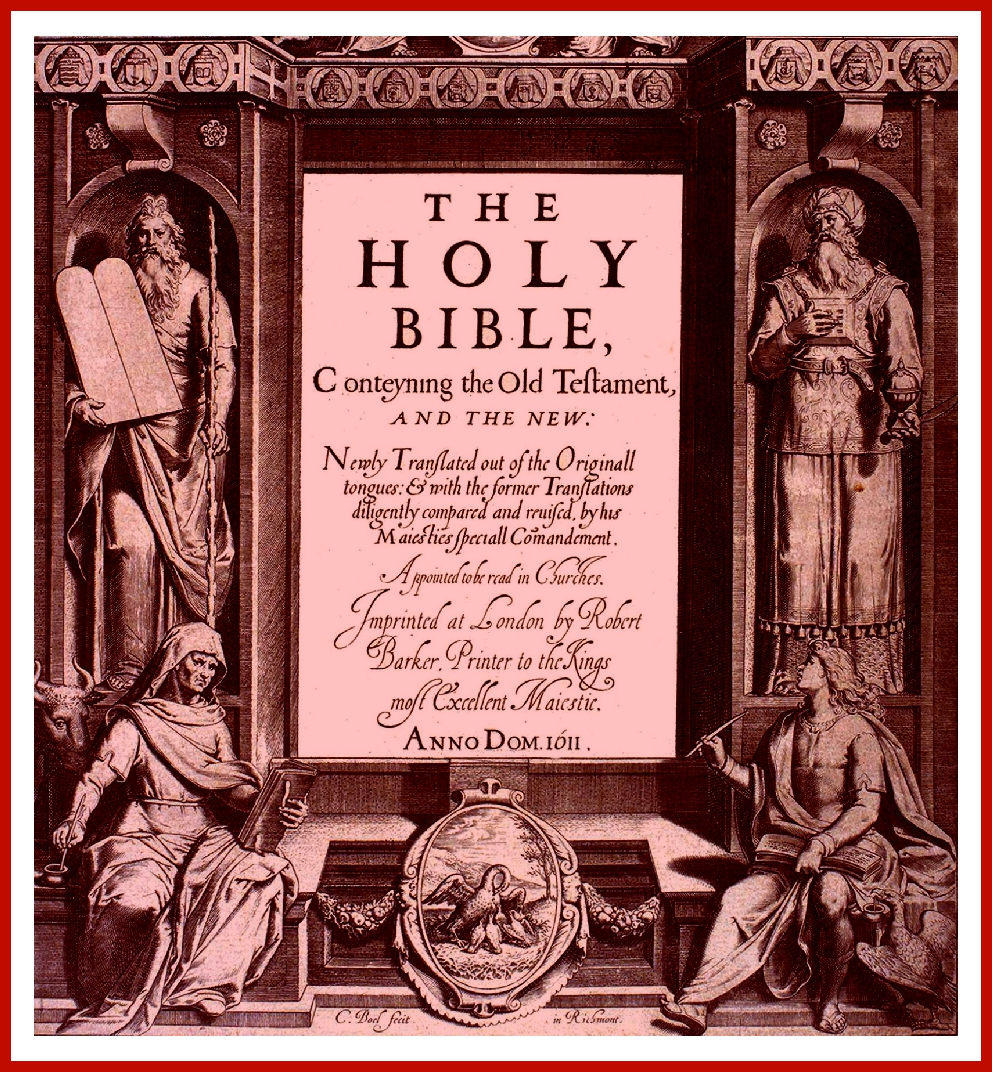
The King James Version (KJV, or Authorized Version) of 1611 is a landmark English Bible translation—widely admired for its literary beauty, rhythmic prose, and profound cultural influence on the English language.
However, there are several well-documented issues with KJV translation. These come primarily from the translators’ level of scholarship, the then available manuscripts, the now archaic language and the Protestant bias in the early 17th century. It is far from divinely inspired, as some claim.
Source Manuscript Issue
The KJV New Testament was primarily based on the Textus Receptus (TR), a Greek text compiled by Erasmus (1516–1522) in the early 16th century from a handful of late medieval Byzantine manuscripts (mostly from 12th–15th centuries). They also did secondary translation from the Latin Vulgate in places.
These manuscripts were often incomplete, geographically limited, contained copying errors and interpolation. As a result, some passages in the KJV contain readings that were not in the original New Testament, such as the Comma Johanneum:
“For there are three that bear record in heaven, the Father, the Word, and the Holy Ghost: and these three are one.” (1John 5:7 KJV)
“For there are three that testify:” (1John 5:7 NIV)
This explicit Trinity statement appears in no Greek manuscript before the 14th–16th centuries and was reportedly added to the TR under pressure; it is absent in modern translations.
Other interpolations include:
- Longer ending of Mark 16:9–20—The KJV includes these verses (post-resurrection appearances, signs like handling snakes and drinking poison, etc.). They are absent from the oldest manuscripts. (Compare with NIV)
- John 5:4 (angel stirring the pool)—The KJV includes an explanatory verse about an angel stirring the Bethesda pool waters for healing. It is missing from early manuscripts. (Compare with NIV)
- Acts 8:37 (Philip and the Ethiopian eunuch’s confession)—The KJV includes the full verse: “And Philip said, If thou believest with all thine heart, thou mayest. And he answered and said, I believe that Jesus Christ is the Son of God.” This is absent from the earliest and most reliable Greek manuscripts. This is a later addition to explicitly link Protestant concept of faith/confession to baptism, reinforcing their case for believer’s (adult) baptism over practices like infant baptism. (Compare with NIV)
- Acts 12:4 (“Easter”)—The Greek pascha (Passover) is translated “Easter” only here in the KJV (it is “Passover” in all 28 other New Testament occurrences). The context is explicitly the “days of unleavened bread” (Passover season). This a translational bias or carryover from earlier English versions (like Tyndale). (Compare with NIV)
- And many others like Matthew 17:21 KJV (Compare with NIV), Romans 16:24 KJV. (Compare with NIV)
These are often footnoted or omitted in modern versions because they were added later, that is, not found in the earliest manuscripts. These differences may sometimes affect the foundational doctrines of the Apostolic era.
Since 1611, thousands of earlier more reliable manuscripts have been discovered including papyri from the 2nd century which show differences from the TR. Modern critical editions (like, Nestle-Aland) use these earliest, more diverse sources and apply rigorous textual criticism.
Errors and Inaccuracies Issue
Even where the TR text matches with ancient manuscripts, some KJV renderings reflect limited linguistic knowledge, secondary translations from Vulgate, or theologically biased interpretive decisions of the translators.
The KJV contains numerous translation errors where Greek or Hebrew words were misinterpreted or omitted.
In Matthew 20:15, the Greek words “e” (means ‘or’) is omitted and in other places “ei” (means ‘if’) is not translated. In Matthew 24:31, plural forms in Greek are rendered singular in the KJV. More errors:
- “Unicorns” (Deuteronomy 33:17; Numbers 23:22)—Hebrew re’em means a wild ox or aurochs, not a mythical unicorn.
- “Brass” for copper (Deuteronomy 8:9)—Ancient technology produced copper, not brass (which is an alloy of copper and zinc).
- Isaiah 7:14—”Virgin shall conceive” follows the Greek Septuagint and Matthew’s quote, but Hebrew almah means “young woman”. The more specific Hebrew word for virgin is bethulah.
- Genesis 1:1 (“the heaven” singular vs. plural heavens)
- Inconsistencies in Leviticus renderings
- Rendering Vulgate over Greek in places like Luke 2:22.
The translators used formal equivalence (word-for-word where possible), which is literal but sometimes stiff or unclear. Italicized words (added for English flow) can introduce interpretive bias. They also made minor errors in printing/revisions.
Additionally, some Old Testament passages are secondary translations from Latin readings.
Archaic Language and Style: An Issue for Modern Readers
The KJV uses archaic English (from 1611), which can obscure meaning for modern readers. Over time, revisions were made to spelling, punctuation, and grammar, notably by Benjamin Blayney in 1769, but the language remains largely outdated. Modern readers often misinterpret it without realizing:
WORDS WITH CHANGED MEANING (“False Friends”)
- Charity → Love (from Greek agape not just financial giving). “And though I bestow all my goods to feed the poor, and though I give my body to be burned, and have not charity, it profiteth me nothing” (1Corinthians 13:3). Modern: “…have not love…”
- Conversation → Conduct, behavior, or way of life (not talk). “Let your conversation be without covetousness” (Hebrews 13:5, Philippians 1:27; Philippians 3:20). Modern: “Let your conduct/lifestyle…”
- Prevent → To go before or precede (not to stop something). “Prevent us, O Lord, in all our doings” (from the Book of Common Prayer influence; see also 1Thessalonians 4:15). Modern: “Go before us…”
- Suffer → To allow or permit (not a bad experience). “Suffer little children to come unto me” (Mark 10:14). Modern: “Allow/let little children…”
- Quick → Alive or living (not fast action). “The word of God is quick, and powerful” (Hebrews 4:12). Modern: “living and active.”
- Let → To hinder or prevent (opposite of modern ‘allow’). “Only he who now letteth will let” (2Thessalonians 2:7). Modern: “Only he who now hinders…”
COMPLETELY OBSOLETE OR RARE WORDS
- Anon → Immediately or at once. “And forthwith he came to Jesus… anon he said” (Matthew 13:20, Mark 1:30).
- Besom → Broom. “I will also make it a possession for the bittern, and pools of water: and I will sweep it with the besom of destruction” (Isaiah 14:23).
- Bruit → Rumor or report (as a verb: to spread a rumor). “The bruit of them hath gone forth” (Jeremiah 10:22).
- Chambering → Lewd or immoral behavior (often sexual). “Not in chambering and wantonness” (Romans 13:13).
- Emerods → Hemorrhoids or tumors. “The Lord will smite thee with the botch of Egypt, and with the emerods” (Deuteronomy 28:27).
This creates barriers to understanding and can lead to doctrinal or practical confusion. Even the updated printings retain these archaisms, unlike modern translations that use contemporary English while aiming for accuracy. This confusion is often used by KJV-only Protestants preachers to their advantage.
Other Notable Obsolete Words
- Adamant (hard stone, Ezekiel 3:9),
- Apothecary (pharmacist, Exodus 30:25),
- Bewray (betray/reveal, Matthew 26:73),
- Bullock (castrated bull, many occurrences),
- Choler (anger, Daniel 8:7),
- Concupiscence (lust, Romans 7:8),
- Cruse (clay jar, 1 Samuel 26:11),
- Daysman (umpire/arbitrator, Job 9:33).
Doctrinal Additions and Bias
Some KJV passages include additions or clarifications that were not in the earliest manuscripts, sometimes reflecting theological biases of the translators. For instance, 1John 5:7, quoted above, includes a Trinitarian formula absent in early Greek manuscripts. The translators occasionally engaged in eisegesis, reading their own doctrinal views into the text.
SEND A COMMENT
Links to our Massage Box
DOWNLOAD AS PDF
Printable version of this Page
Further Comments on "ISSUES WITH KJV TRANSLATION"
WHAT IS KJV-ONLYSM AND ITS CRITICISM
KJV-onlyism (also called King James Onlyism or KJVO) is the belief that the 1611 King James Version (KJV, or Authorized Version) is the only inspired, inerrant, or fully trustworthy English translation of the Bible.
Adherents often claim that modern translations are based on corrupt manuscripts, undermine core doctrines, or stem from conspiratorial motives (like, liberal, occult and one-world agendas). This position lacks biblical, historical, or textual support and creates false interpretations.
[Note: We have already covered most of the following points of the key issues in KJV in our main article. Here we have summarized them for the flow of this discussion.]
Typically, KJV itself not rejected—it is praised for its literary beauty, historical influence, and accuracy for its time—but opposed for the exclusive claim that it alone is God’s preserved Word in English.
Key General and Protestant Arguments Against KJV-onlyism
Textual basis is not superior:
The KJV relies on the Textus Receptus (TR). Modern translations use older, more numerous manuscripts (including Alexandrian-type texts and discoveries like the Dead Sea Scrolls). The TR includes later additions, scribal expansions, and errors (for instance the Comma Johanneum in 1 John 5:7–8, a Trinitarian insertion with no early Greek support; or parts of Mark 16:9–20 and John 7:53–8:11).
It should be emphasized that no core Christian doctrine is lost in modern translations, and the TR itself omits words/phrases found in the majority of manuscripts. Preservation of Scripture refers to the originals (autographs), not a single printed edition or translation.
Translation issues and revisions:
The 1611 KJV contained errors, archaic phrasing, and inconsistencies (example, “strain at a gnat” in Matthew 23:24 should be “strain out”; “Jesus” in Hebrews 4:8 refers to Joshua).
It has been revised multiple times (over 100,000 changes by 1769), raising questions about which edition is “perfect.” Significantly, the original translators’ preface explicitly argues against viewing any single translation as final or inspired.
Readability and intelligibility:
The KJV’s 17th-century English is no longer fully understandable due to obsolete words (“besom,” “emerod,” “chambering”) and “false friends” (words that look familiar but have shifted meaning, like, “suffer” meaning “permit,” “study” meaning “be diligent”). This violates 1Corinthians 14’s principle that edification requires clear understanding. God intends His Word to be accessible, not obscured by language change.
No biblical or historical basis:
Scripture promises preservation of God’s Word but does not specify one English translation (or even the TR) as the sole vehicle. KJV-onlyism is a relatively recent 20th-century phenomenon in some fundamentalist circles, sometimes tracing influences to non-evangelical sources. It can foster schism, legalism, or conspiracy thinking in Protestantism rather than unity around the gospel.
Practical dangers:
It can discourage engagement with accurate scholarship, create barriers to evangelism (especially for younger or non-native speakers), and lead to uncharitable attacks on other believers or translations.
Protestant Critics
Several respected evangelical figures and scholars have written or spoken extensively against KJV-onlyism.
James R. White: Author of the most influential critique, The King James Only Controversy (1995, revised editions). A Reformed apologist and director of Alpha and Omega Ministries, White systematically addresses KJV-only claims, showing problems in the TR, translation choices, and the movement’s cult-like elements in extreme forms (while affirming the KJV’s value in places). His work is frequently cited as a go-to resource.
Daniel B. Wallace: Leading New Testament textual critic, professor, and curator of Greek manuscripts. In his article “Why I Do Not Think the King James Bible Is the Best Translation Available Today,” he explains the TR’s limitations (late manuscripts, scribal additions), specific KJV errors, and why critical texts (used in NIV, ESV, NASB, etc.) are closer to the originals. He emphasizes that differences are mostly minor and do not affect doctrine.
Mark Ward: PhD (Bob Jones University), former KJV-onlyist, editor at Crossway, and YouTuber (wardonwords). Author of Authorized: The Use and Misuse of the King James Bible. He focuses on readability issues (false friends, dead words) and argues from 1Corinthians 14 that intelligibility matters. Ward advises gracious engagement—avoid jumping straight to textual criticism; instead, highlight how language change hinders understanding—and warns of the movement’s divisive potential.
D.A. Carson: Theologian who wrote an earlier critique, The King James Version Debate: A Plea for Realism (1979). He calls for balance and realism in translation debates.
Broader criticism comes from evangelical institutions, blogs (The Gospel Coalition, The Cripplegate), and scholars who use modern translations while respecting the KJV. Many note that moderate “KJV-preferred” or Textus Receptus advocates exist, but strict “onlyism” is the target.
Protestant critics view KJV-onlyism as well-intentioned but misguided, rooted in misunderstandings of how the Bible has been transmitted and translated. They encourage using reliable, readable translations while appreciating the KJV’s legacy. For deeper reading, White’s and Ward’s books are standard starting points.
Catholic Take on KJV-onlyism
Yes, there are Catholic critics of KJV-onlyism, though it is not a major focus in Catholic apologetics or theology.
KJV-onlyism is overwhelmingly a Protestant (especially fundamentalist Baptist or independent) movement rooted in sola scriptura—the idea that Scripture alone is the final authority—which Catholics reject in favor of Scripture interpreted through the Church’s magisterium and Tradition.
Catholics therefore tend to view translation exclusivity as a non-issue or a Protestant intramural debate, but prominent Catholic apologists and writers have still addressed and critiqued it when discussing Bible translations, textual history, or Protestant positions.
Catholic critiques generally do not attack the KJV itself (many appreciate its literary beauty, and some English-patrimony Catholics even use or publish Catholic editions of it with the deuterocanonical books restored).
Instead, they target the “only” claim as misguided, ahistorical, and unnecessary. It elevates one 17th-century Protestant translation above all others (including Church-approved Catholic ones like the Douay-Rheims or modern editions with an imprimatur).
It ignores that the original 1611 KJV included the deuterocanonical books (what Protestants call the Apocrypha) and has been revised multiple times.
It stems from a Protestant framework that Catholics see as flawed, since the Church (not any single translation) guarantees authentic interpretation.
Parallels exist with historical Catholic “Vulgate-only” attitudes or modern “Douay-Rheims-onlyism,” which Catholic critics reject as extreme.
Prominent Catholic Critics
Jimmy Akin (senior apologist at Catholic Answers, author, and podcaster): One of the clearest and most direct Catholic critiques comes from Akin in his writings on choosing Bible translations. He describes “King James-onlyism” as a position held by some very conservative Protestants who claim the KJV is the only acceptable English Bible—based on supposedly perfect manuscripts, avoidance of “liberal” renderings, the saintliness of its translators, or its “Authorized” status. He calls these claims amusing but notes that some take them very seriously, then dismantles them (like, pointing out that the Textus Receptus manuscripts underlying the KJV were compiled by the Catholic scholar Erasmus). Akin explicitly compares it to a Catholic equivalent he dubs “Douay-Rheims-onlyism” (advocates who treat the traditional Catholic English Bible as uniquely superior because it is based on the Vulgate and was “authorized” by the Council of Trent). He rejects both forms of “onlyism,” emphasizing that Catholics should choose translations based on purpose (literal for study, readable for devotion) and can even use multiple versions for comparison. He recommends Church-approved modern ones like the Revised Standard Version: Catholic Edition (RSV-CE) for balance and accessibility.
Shane Schaetzel (Catholic convert, blogger at RealClearCatholic.com, and member of the Personal Ordinariate of the Chair of St. Peter): In his article “The King James Version (KJV) Only?,” Schaetzel directly critiques the position as a “Protestant quirk” among Evangelical Fundamentalists who treat the KJV as the sole authoritative English translation and all others as “modernist corruptions.” He argues it is incompatible with Catholic teaching because Catholics do not base religious authority on any translation (or on sola scriptura). He notes practical issues like the fact that modern KJV editions are revised/edited and that the original 1611 version included the deuterocanonical books. While he personally likes the KJV’s literary quality and traditional English (which aligns with some Catholic liturgies and devotions), he stresses that Catholics have the Church-approved Douay-Rheims as their historical standard and do not need (or endorse) exclusivity in any translation.
Catholic Answers and other apologists/bloggers: Catholic Answers magazine and similar outlets mention KJV-onlyism when discussing Fundamentalist views, describing it as a minority position even among KJV-preferring Protestants and noting its quasi-inspirational claims about the translation (associated with figures like Peter Ruckman). They frame it as extreme rather than normative. Some Catholic bloggers (like on Patheos) draw cautionary parallels between KJV-onlyism and radical Catholic traditionalism, viewing both as forms of nostalgic over-attachment that can lead to division or idolatry of a particular form/language. User discussions in Catholic forums (r/Catholicism on Reddit) often dismiss it outright as “one of the craziest fringe movements in Christianity.”
Catholic critics tend to be gracious but firm: the KJV is a fine historical translation with strengths but treating it (or any translation) as the only inspired or authoritative English Bible is unnecessary, unbiblical from a Catholic viewpoint, and often based on misunderstandings of textual history and Church authority.