
WHAT IS BIBLICAL CANON?
(When and How it Happened?)
The Christian Biblical canon (the official closed list of books the Church recognizes as divinely inspired Scripture and normative for faith and life) developed gradually over several centuries through recognition by early Church leaders, rather than being ‘decided’ in one dramatic event or council.
The process involved identifying books that were already widely used in worship, quoted by Church Fathers, consistent with apostolic teaching (apostolicity), and accepted across churches (catholicity). It was not arbitrary; the Church discerned what God had already inspired and given to His people.
Old Testament Bible Canon
The Old Testament is the bedrock of Christianity. It is the foundational text of the Christian Biblical canon, derived from the Hebrew Bible, or Tanakh. However, early Church primarily used the Greek Septuagint (LXX) translation, which included books that the Jews later removed from their Jewish canon. These “deuterocanonical” books were read in churches from the start.
The Jewish canon of 24 books is claimed to have largely stabilized around 90-100 AD, through hypothetical traditions like the Council of Jamnia.
The early Christians did not follow any Jewish list but always used the broader Septuagint collection.
New Testament Bible Canon
The 27 books of the New Testament (4 Gospels, Acts, 13 Pauline epistles + Hebrews, 7 Catholic epistles, and Revelation) were all written in the 1st century. Recognition happened in stages:
In the 1st-2nd centuries, individual books (especially the Gospels and Paul’s letters) were circulated and quoted as authoritative. St Paul refers to the Gospel of Luke as Scripture (1Timothy 5:18). St Peter calls Paul’s writings Scripture (2Peter 3:15-16). Early writers like St Clement of Rome (95 AD), St Ignatius (115 AD), and St Polycarp (~108 AD) reference multiple New Testament books in their writings.
In the late 2nd century, The Muratorian Fragment (170-200 AD) lists most New Testament books (missing some, like Hebrews and 2-3 John). And St Irenaeus (180 AD) strongly defends the four Gospels.
Origen and others, in the 3rd century discuss a near-complete set, though some ‘disputed’ books (antilegomena: Hebrews, James, 2 Peter, 2-3 John, Revelation) remained debated in certain regions, whose apostolic authorship or canonicity was questioned by some early Church writers, but which were ultimately accepted into the full biblical canon.
By the 4th century, the core was already widely accepted; councils and leaders simply clarified and closed the list amid heresies and persecutions.
Key Milestones in Formal Recognition
St Athanasius of Alexandria—In 367, in his 39th Festal (Easter) Letter, gives the first known complete list exactly matching today’s 27 New Testament books. He also lists Old Testament books (22, following Jewish numbering but drawing from the Septuagint tradition) and distinguishes “canonical” books from others useful for reading (e.g., Wisdom, Sirach, Tobit, Judith) or the heretical ones to avoid. This is often cited as the earliest clear reference to the modern New Testament canon.
In 382 the Council of Rome (under Pope Damasus I), Issued a list of the full canon (Old + New Testament, including the deuterocanonical).
As did the Synod of Hippo (North Africa, with Augustine influential) in 393.
Councils of Carthage (397 and 419)—These are the most commonly referenced for the Bible canon. The 397 council explicitly listed the books to be read in church (identical to the Catholic canon: 46 Old Testament books including the deuterocanonical + 27 New Testament).
The list begins with: “It was also determined that besides the Canonical Scriptures nothing be read in the Church under the title of divine Scriptures. The Canonical Scriptures are these: [full OT list including Tobit, Judith, Maccabees, etc.] Of the New Testament: four books of the Gospels, one book of the Acts… [full 27 NT books].”
Though these were regional Western councils, they were highly influential. They did not “create” the canon—they affirmed what was already in use.
Council of Florence (1431–1445) and finally the Council of Trent: (1545-1563) dogmatically defined the canon (with an anathema against rejecting it) in response to the rising influence of Protestantism.
“When” and “How”
Summary of When: No single date. The process spanned ~1st-4th centuries, with the New Testament essentially settled by the late 300s (367 Athanasius letter; 393-397 the African councils). The full Catholic/Orthodox canon was later dogmatically reaffirmed at Trent.
Summary of How: Through organic, Spirit-guided consensus among church leaders. Books were tested for apostolic roots, doctrinal soundness, and universal use in liturgy. Councils did not vote books “in” or “out” arbitrarily; they ratified widespread practice.
[The Big Myth: The Council of Nicaea in 325 decided the canon—it did not.] Read the link below: FURTHER COMMENTS ON “BIBLICAL CANON”
SEND A COMMENT
Links to our Massage Box
DOWNLOAD AS PDF
Printable version of this Page
Further Comments on "Biblical Canon"
The myth that the Council of Nicaea (325) decided the biblical canon is entirely unfounded. No contemporary records from the council—nor from attendees like Eusebius of Caesarea or St Athanasius—mention any discussion of which books belonged in the Bible.
The council was convened by Emperor Constantine primarily to address the Arian controversy (debating the nature of Christ’s divinity), settle the date of Easter, and handle other church discipline issues. It produced the original Nicene Creed and 20 canons on ecclesiastical matters, but nothing on Biblical canon.
The New Testament canon had already been developing gradually for centuries through widespread church use, apostolic authorship, and theological consistency. Early lists (such as the Muratorian Fragment) and figures like St Athanasius (in his 367 Easter letter) already reflect a canon very close to the modern 27-book New Testament. Later regional councils (Hippo in 393 and Carthage in 397) simply affirmed what was already broadly accepted. There was no single dramatic “vote” or imperial decree at Nicaea.
Origin of the Myth
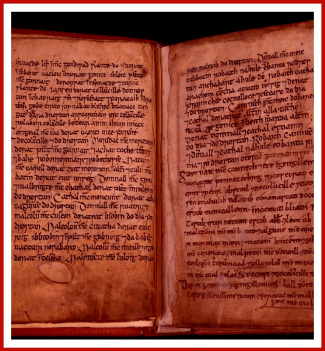
The story first appears in an obscure late ninth-century (c. 887) anonymous Greek manuscript known as the Synodicon Vetus, a Byzantine compilation that claims to summarize decisions of various church councils up to that time. It fabricates a miraculous tale for Nicaea:
“The canonical and apocryphal books it distinguished in the following manner: in the house of God the books were placed down by the holy altar; then the council asked the Lord in prayer that the inspired works be found on top and—as in fact happened—the spurious on the bottom.”
This is the earliest known source of the legend; no earlier Christian writer (including those who documented Nicaea) mentions it. The Synodicon Vetus was unknown in Western Europe until the 16th century, when it was brought from the Morea (Greece) by Andreas Darmasius. Lutheran theologian Johannes Pappus edited and published it in Strasbourg in 1601. The anecdote then appeared in a 1671 supplement/appendix to Jesuit scholar Philippe Labbé’s massive Sanctissima concilia.
The myth gained real traction in the 18th century thanks to the French Enlightenment writer Voltaire. In his widely read Dictionnaire Philosophique (1764, under the entry on “Councils”), Voltaire mockingly referenced the Synodicon Vetus story:
“It is reported in the Supplement of the Council of Nicaea that the Fathers, when they had no idea how to determine which were the questionable or apocryphal books of the Old and New Testament, piled all of them disorderly on an altar; and the books to be rejected fell to the ground. It’s a pity this nice method has fallen into disuse nowadays.”
The enlightened Voltaire’s sarcasm helped popularize the tale across Europe as a supposed historical fact, often used to ridicule Church authority. From there, it circulated in 19th- and 20th-century writings and entered popular culture.
The myth received a major modern boost from Dan Brown’s 2003 novel The Da Vinci Code (and its 2006 film), which portrayed Constantine and the bishops at Nicaea as arbitrarily choosing the canon (and suppressing “alternative” gospels) for political reasons. Brown did not invent the myth—he simply recycled and dramatized an already-existing story.
A possible minor precursor (but not the full myth) appears in St. Jerome’s preface to his Latin translation of Judith (405), where he notes that “the Nicene Council is considered to have counted this book among the number of sacred Scriptures.” Scholars have noted that this is ambiguous, likely refers only to the Old Testament/apocrypha debate, and does not describe any council vote, miracle, or full-canon decision. It was later probably misunderstood or exaggerated.
The myth is clearly a medieval Byzantine invention from the Synodicon Vetus that lay dormant for centuries, was revived through 17th-century scholarship, and was amplified by Voltaire and modern fiction. It has no basis in the actual historical records of the Council of Nicaea.